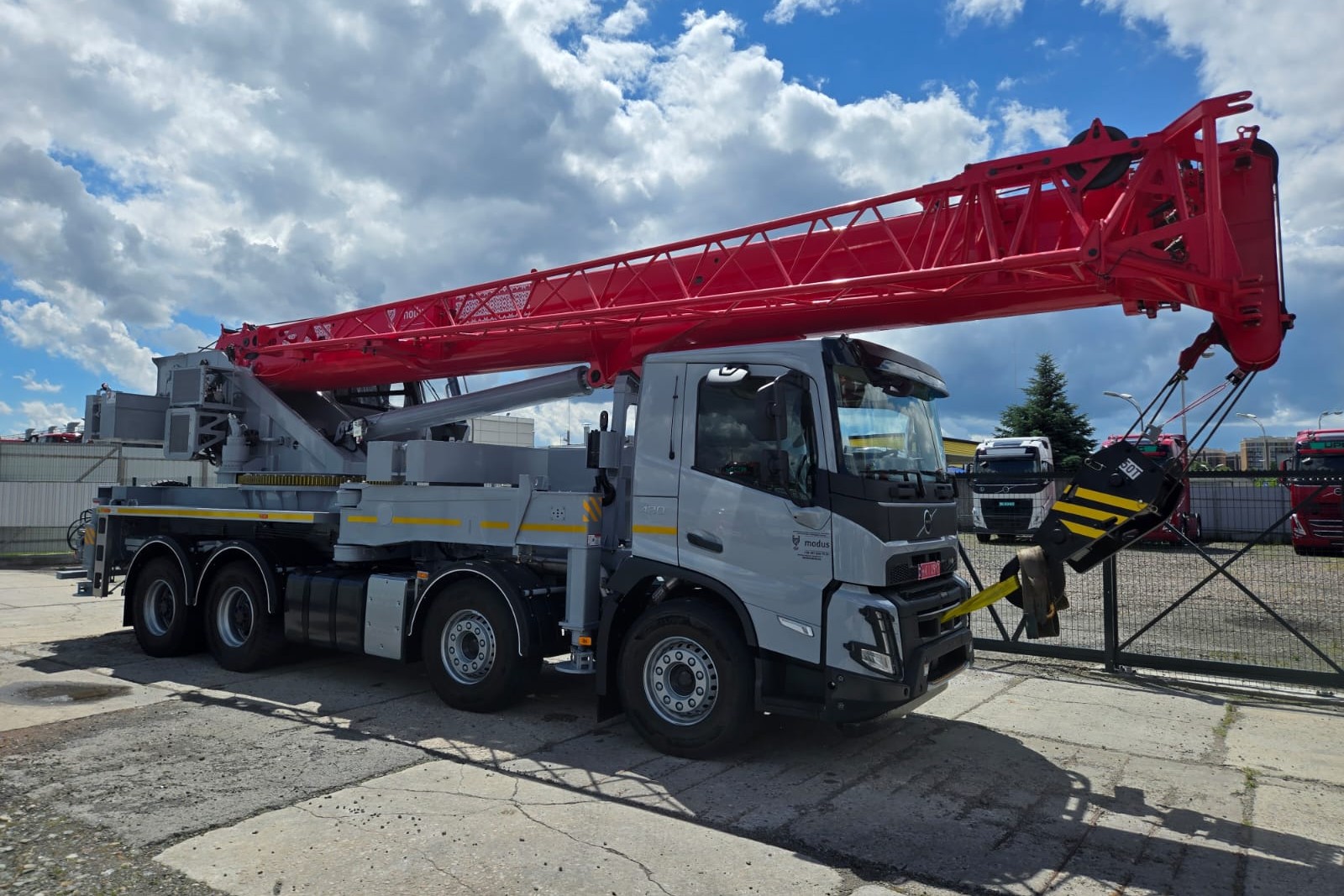
It is hard to imagine any construction project without excavators. Road construction equipment used for building roads, bridges, and structures relies on various excavators for digging foundations and trenches. In general, by their operating principle, excavators belong to the so-called earthmoving machinery category.
What types of excavators are used in construction?
The primary working component of this earthmoving equipment is the bucket. The price of an excavator depends on:
- its operational weight
- the amount of additional equipment.
Our specialists have prepared a brief overview of the existing types of excavators.
Wheeled and Crawler Bucket Excavators
Traditional hydraulic bucket excavators are earthmoving machinery designed for digging deep foundations for buildings, bridges, subways, and other structures, as well as trenches for pipelines and utilities (gas, water, electricity, heating networks). In this earthmoving machinery, as in other types of excavators, the primary working component is the bucket, which is used for excavating soil (foundations on construction sites), rocks and ore (creating quarries in mineral deposits), as well as the bottom layer in water bodies during bridge construction. Buckets can vary in volume. The base chassis moves on wheels or on crawler tracks. Crawler excavators are the most in-demand in the construction industry.
When choosing excavators, one should consider the following parameters:
- First, clients pay attention to cutting height, dumping height, working radius, and digging depth.
- Also, it is necessary to assess characteristics such as engine power, bucket capacity, and fuel efficiency.
Bucket capacity depends on the operational weight of the excavator and the type of soil to be worked with. As standard, almost all manufacturers provide a bucket suitable for working with rock formations (suitable for all soil types of categories 1–4). However, if working with rock is not required, a larger-capacity bucket can be offered. The key parameter for digging and cutting is the force applied to the bucket and the excavator arm.
Some manufacturers, including SANY, offer models with extended arms and booms. In this case, the operational characteristics of the excavator significantly improve, including digging depth, cutting height, dumping height, and working radius. SANY Group provides this option for its 22 and 25-ton models.
All SANY excavators are equipped with an auxiliary hydraulic line for a hydraulic hammer or other attachments.
In Ukraine, purchasing SANY excavators (China) on both crawler and wheeled chassis is possible through our company. The advantage of SANY earthmoving machinery lies in its high efficiency, economical engines, well-thought-out and reliable design, and comfortable operator cabin. Most importantly for Ukrainian customers, SANY excavators are simple and fast to maintain. This has been achieved by the Chinese manufacturer through modern innovations in machinery design and configuration.
Grade Excavators with Telescopic Bucket
Another interesting modification of earthmoving machinery is the self-propelled grade excavators, construction and road machines equipped with a telescopic boom resembling a crane, but instead of a hook, a bucket with a rotary mechanism is installed. The telescopic boom is operated from a separate operator cabin. The superstructures are mounted on road truck chassis, and there are also models on self-propelled wheeled and crawler chassis. This is the design principle of UDS grade excavators offered by our company.
Such machinery is used for digging under pipelines, foundations, and debris. The principle of “precise” digging makes grade excavators invaluable for emergency response and disaster relief operations (the most advanced digging is performed by the UDS 214 model with micro-step functionality). Besides small-scale earthworks for emergency response, this equipment is in demand where channels and trenches need to be dug and for servicing utilities (gas, electricity, water supply, heating networks).
UDS machinery, besides a rotary bucket, can be equipped with vibratory compactors, drilling rods, hydraulic hammers, and other attachments for earthworks. Since this equipment operates in challenging terrain (rubble, dunes, swampy areas, mines, and tunnels), full-drive modifications of truck chassis or crawler-mounted units are recommended. The advantage of wheeled models is their mobility, as transporting crawler excavators requires additional semi-trailer carriers.
For working on uneven terrain, self-propelled wheeled models are the most convenient.
Currently, the most advanced telescopic loader excavators UDS are manufactured by the Slovak company CSM. Although the USSR originally pioneered telescopic excavators, Slovaks succeeded in producing machinery with European operational comfort, high durability, and trouble-free service. In Ukraine, such equipment is especially in demand by government agencies (Ministry of Defense, Ministry of Emergency Situations, etc.).